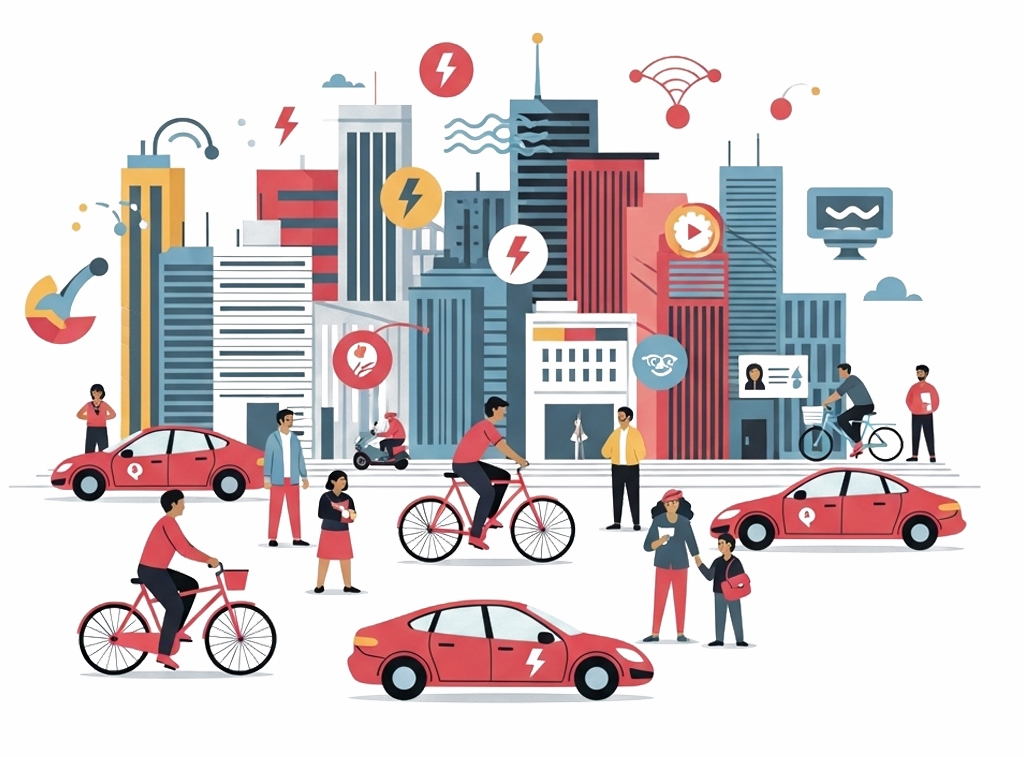
Smart City Hacks for Zen-like Financial Security
The Smart City-zen's Guide - Get it now on Amazon and other platforms!
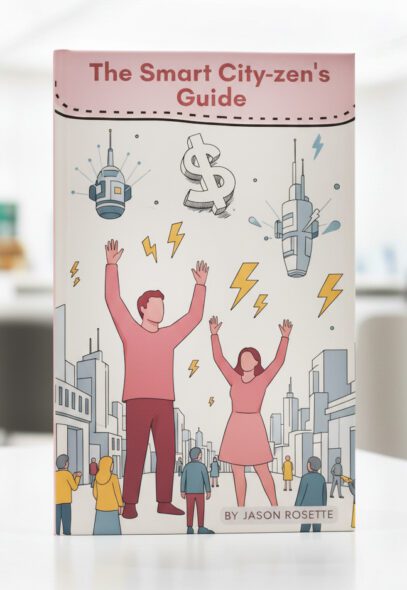 The Smart City-zen Guide by Jason Rosette
"The Smart City-zen's Guide isn't about making you a tech wizard or an urban planning expert. It's about practical money in your pocket"
I Just Released a Book That Could Save You $5,000 This Year—Here's Why I Wrote It
After two decades of producing documentaries, coaching executives, and teaching storytelling across Asia and the US, I've developed a pretty good nose for when people are being told a story that doesn't serve them.
And the biggest story nobody's questioning right now—from Portland to Atlanta, Austin to Boston? That "smart city" technology is something that happens to you, not for you.
Get The Smart City-zen's Guide on Amazon and other platforms!
The $7,400 Tax You Don't Know You're Paying
I've spent two decades working across Asia, and the last few years I've been watching something fascinating happen in American cities. New infrastructure goes up, data systems get deployed, sensors appear on streetlights. Officials talk about efficiency and sustainability. But here's what I kept noticing—from Bangkok to San Francisco, Seoul to Denver: the average person never sees a dime of the benefit.
The Smart City-zen's Guide - Get it now on Amazon and other platforms
Meanwhile, they're hemorrhaging money.
The typical urban household is paying what I call a "Hidden Urban Tax" of about $7,400 annually—overpaying for utilities because they're using electricity during peak hours, sitting in traffic that could be avoided with better routing, missing rebate programs they qualify for, paying insurance premiums that don't account for modern safety tech.
It's all fixable. The infrastructure is already there. You're just not being told how to use it.
Why I Wrote The Smart City-zen's Guide
As a multimedia producer and storyteller, I've always been interested in how information flows—who gets it, who doesn't, and who profits from that gap. I started researching smart city systems not as a tech evangelist, but as someone trying to answer a simple question: If cities are getting "smarter," why are regular people still getting poorer?
What I found was staggering. Cities across the United States—and around the world—are rolling out:
- Smart grids that let you shift energy use to cheaper hours (California, Texas, and New York are leading the way)
- Real-time traffic systems that can save you 45+ minutes daily (active in over 60 US metros)
- E-bike and EV rebate programs worth thousands of dollars (federal, state, and local incentives stacking up)
- Demand-response incentives that literally pay you to turn down your AC for 30 minutes (available in most major US utilities)
- Open data portals with property insights that can boost your home value 3-5% (now in hundreds of American cities)
And almost nobody knows about them.
The information exists. The programs exist. But they're buried in municipal websites, scattered across apps, written in bureaucratic language that makes your eyes glaze over.
So I wrote the manual that should have come with your address.
What You'll Actually Get From This Book
The Smart City-zen's Guide isn't about making you a tech wizard or an urban planning expert. It's about practical money in your pocket, this month.
I break down exactly how an average household—2-4 people, making $70k-$120k—can unlock what I call the "Efficiency Dividend": $2,500 to $5,500 annually (and often $7,000-$10,000+ in high-cost metros like San Francisco or New York).
Here's what's inside:
Real Savings, Real Fast
- $700-$900 lower utility bills using smart timing and demand-response programs
- $1,200-$2,500 saved or earned on mobility via e-bike/EV rebates, predictive routing, curbside charging
- $400-$800 off insurance premiums, plus a 3-5% home-value boost from sensors and certifications
- Optional $500-$1,500 side income from sensor hosting and micro-gigs
Step-by-Step Playbooks
- Shopping lists (most upgrades under $300)
- 30-day challenges with measurable results
- Direct links to apps, dashboards, rebate forms in your city
- A Digital Rights Manual so you protect your data while you profit
Not Just For City Dwellers
I included a full chapter on rural and off-grid alternatives, because this isn't just about dense urban centers. Small towns and rural areas have their own version of this—and their own opportunities.
The Smart City-zen's Guide - Get it now on Amazon and other platforms
Who This Book Is For
You don't need to be a tech person. You don't need to love city life. You don't even need to be staying in the city long-term.
This book is for anyone who:
- Wants to stop bleeding money on utilities, transportation, and insurance
- Is curious about what all this "smart city" infrastructure actually does
- Likes the idea of getting rebates and incentives they're already qualified for
- Wants to future-proof their home or prep for a rural/off-grid transition
Whether you're planning to stay urban or eventually make a reset elsewhere, this is the modern personal-finance playbook for the infrastructure decade ahead.
Why Now?
We're in "the infrastructure decade." Governments are pouring billions into smart city upgrades—and they're not going to come knock on your door and tell you how to benefit from it.
The gap between people who know how to navigate these systems and people who don't is going to get wider. Fast.
I wrote this book because I believe the best stories—the best tools—should be accessible to everyone, not just the people who can afford consultants or who stumble onto the right Reddit thread.
Get Your Copy
The Smart City-zen's Guide: How to Use Smart City Tech and Data to Cut Costs, Future-Proof Your Home, and Thrive in the New Urban Economy is available now on Kindle and other platforms.
Your city is upgrading. Your address can be one of your most profitable assets.
You just need to know how to use it.
https://www.amazon.com/dp/B0G3LBCDN7
 Jason Rosette is a multimedia producer, filmmaker, and executive communication coach with 20+ years of international experience across Asia and the United States. He currently runs Camerado Media and teaches business storytelling and public speaking.
