Jason Rosette Cinematic Universe: a Cold War Black Box & Indochina Noir
"Hey did you hear? His father turned out to be an elite physicist, working on experimental black box nuclear projects during the Cold War. No one knew. He only found out the truth fifty years after his father died, during a late-night online search from his office in Indochina. He was never the same."
Before the Revelation
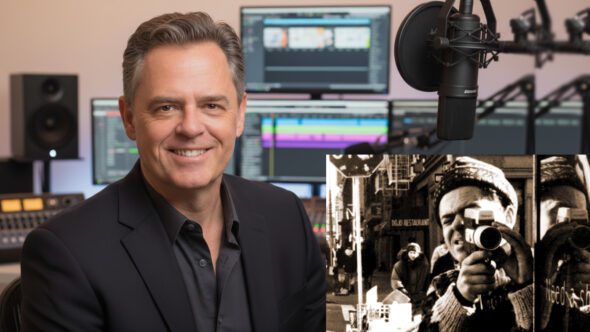
For thirty years I lived the street-level story. NYU grad selling books on New York sidewalks in between film projects. Before that, growing up back in Ohio, painting houses and caddying to fund film edits. I thought that working-class hustle was the only frequency I had.
In 2024 I found out I'd missed a major part of the picture.
It was about my father. He'd died nearly fifty years earlier. He was a physicist, and everyone in the family thought he just grew crystals. Thought that when he died young, at age 43, leaving no pension, it was just a fluke. Bad luck.
Our family breadwinner had died young. A pension was denied. A silence lasted for decades, and our family was left to figure it out alone.
The working-class years I experienced then, and for decades afterwards, weren't an identity choice. They weren't a kind of working class cosplay, which has been so fashionable in Hollywood. They were the aftermath of a loss nobody could yet name or comprehend.
That's the short version. Here's the rest.
The Black Box
We all thought my father, King H. Rosette, was a physicist who grew crystals. That's it. None of us knew what he actually did.
He was a fluke math wizard in a working class family of Polish immigrants in the inner city of Cleveland. The nerd who stayed home to study while others went to play basketball. The nerd who earned a scholarship to grad school. In 2024, while researching a fictional screenplay character, I accidentally learned the rest of the story.
He grew scintillating crystals, pure and flawless, for use in nuclear and infrared applications. Much of it was highly classified. So classified he held a Q-level clearance, the nuclear world's equivalent of Top Secret. He couldn't discuss it with anyone outside his team, including our family.
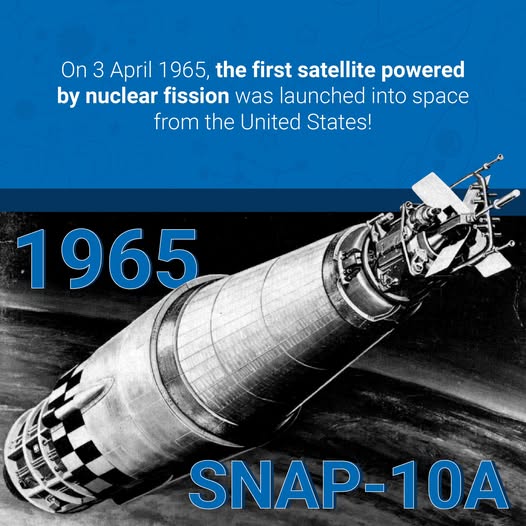
He worked on the SNAP-8 and SNAP-10A portable reactor projects. Yes, that SNAP: the one they launched into space in 1965. Our family had no idea.
In 1976 our family's American Dream went off a cliff. My father, King H. Rosette, died at 43 from occupational radiogenetic illness. He had been vested in his pension at Harshaw Chemical (now part of BASF), yet because he passed just before ERISA, the federal law meant to protect widows and orphans, the company denied the benefits.
Overnight my mother, a sharp, resourceful woman who had grown up in the Liverpool Blitz and come to America on instinct and nerve, was left raising three children alone in a small Ohio town with no degree and no safety net.
Years later, while I scraped through my BookWars days being measured and categorized by people who assumed they understood my origins, my place, my pedigree and my rank, my father's true identity was sitting in a classified archive somewhere far away. Waiting.
What Nobody Knew
I wasn't just challenged or struggling for thirty years. I was the son of a high-level Cold War technocrat whose true legacy was hidden behind a wall of security clearances and a pension denial that left my mother raising three kids alone.
There's a curious phenomenon in the film world. Many directors and producers from privileged backgrounds work hard to signal working-class authenticity: the struggling artist myth, the welder at night, the hardscrabble Harvard graduate. Or eating only potatoes-and-ketchup while struggling to get by in Hollywood while pitching scripts. Or stealing a movie camera to make a first film. It's the gritty origin story polished for press. A street credibility performance.
Meanwhile genuine working-class filmmakers get categorized, ceilinged, and treated as novelty acts by the very people performing their struggle.
My situation runs in the opposite direction entirely. I was the working-class filmmaker people assumed they understood completely. What nobody knew, including me, was that I was carrying an elite scientific pedigree behind a wall of government secrecy and a corporation's pension denial. The hustle was real. The circumstance that created it was not what any of us thought.
You can't fake the frequency of someone who actually lived the grind while unknowingly carrying the legacy of an elite physicist
For years that was the whole story, as far as any of us knew.
The Search
Then in October 2024, while researching a physicist character for a script, I started digging into what my father actually did, figuring it would help me flesh out the character. I recalled the one workplace I remembered him mentioning: Harshaw Chemical Co., so I started there.
Harshaw popped up on the Department of Labor EHSS database, cited for toxic and radiogenic exposure of its workers. I hadn't known that. The thought landed quietly: what if...what if that had something to do with how he died?
But it wasn't just Harshaw Chemical Co. From a dark room in Indochina, late, in the kind of room the light doesn't quite reach, I kept pulling the threads.
He'd gotten his PhD at Case Western University in Cleveland, so I contacted them. The archivist there forwarded me a snippet from a Case Western alumni yearbook, which listed my father as working at a company I'd never heard before:
Atomics International. Made famous by the 1959 Sodium Reactor Experiment at its clandestine Santa Susana Field Laboratory in the Ventura Hills above Los Angeles. That experiment had succeeded...until it had failed.
A 1963 Atomics International phone directory, recovered from a California toxic cleanup case file, put him inside the facility. Then AI mapped his exact extension number to his location on the floor.
Using AI to map his extension number within the 1963 Atomics International directory, I placed him at the center of four major radioactive hazards at the Atomics International De Soto faciltiy: the L-77 nuclear training reactor, a helium mass spectrometer for fuel-cladding leaks, a gamma radiation station, and the SNAP space-reactor workshop.
Not on the periphery. He worked among those hazards for years.
What I found was not a commercial crystal grower. He was an ultra-elite materials physicist workign next to a nucelar reactor, living inside a true Cold War Black Box.
My father was one of fewer than a dozen specialists in the country developing the scintillating detectors that became part of the FLIR (Forward-Looking Infrared) systems used to see through the jungle canopy of the Ho Chi Minh Trail.
He believed that technology could end the war early, through a rapid negotiated settlement. My father told my mother as much, in the careful indirect terms a man under a gag order learns to use. The work cost him his health. The silence cost our family everything else.
The Reckoning
That same work fed directly into my mother's compensation claim with the Department of Labor's EEOICPA program, which I'm managing on her behalf. The process has clawed forward for two years and become a second job conducted entirely online.
Very often, my noirish Phnom Penh Indochine nights these days are still spent as a Cold War sleuth, piecing together shards and strands from fifty-plus years ago to uncover what the system was designed to obscure.
At times it has felt like wrestling a Hydra: it's a faceless procedural wall built, whether intentionally or not, to outlast the people it owes. My mother is 85. We are still racing the clock. But the government is now on the verge of formally admitting what happened to King H. Rosette in those facilities sixty years ago.
That admission, when it comes, closes one case and opens another.
What Comes Next
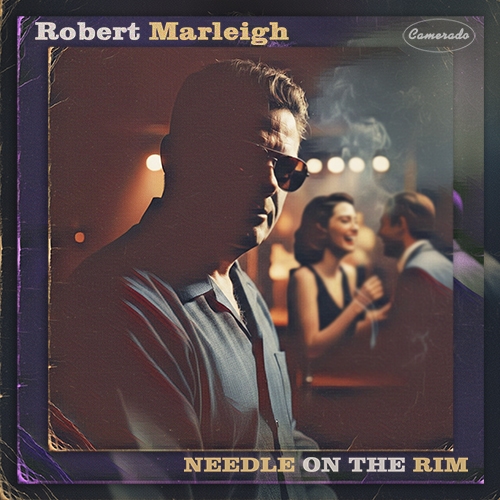
The first artifact of this new direction is Needle on the Rim (2026), a cinematic jazz vocal record built from the same atmospheric weight as this story.
In development now is What Remains, a modern rock opera about our family's recent revelations. It lives somewhere between the warmth of my mother's Liverpool roots and the cold precision of the Atomic era. It's an immersive Future Noir cinematic universe built across fiction film, interactive storytelling, and operatic rock.
The narrative moves from the falling bombs of the Nazi Blitz of 1941, through the 1950's Merseybeat moment to a Beach Boys-informed Southern California of the 60's. Then it kaleidoscopes through the 70s and 80s, decade by decade, until we reach the present.
In the present: a long-lost elite tech wizard's son in Indochina uses AI and fragmented fifty year old archives to resurrect a silenced history. This story has been considered for long-form documentary. Ultimately it demands something larger: operatic rock, with a documentary thread woven inside it.
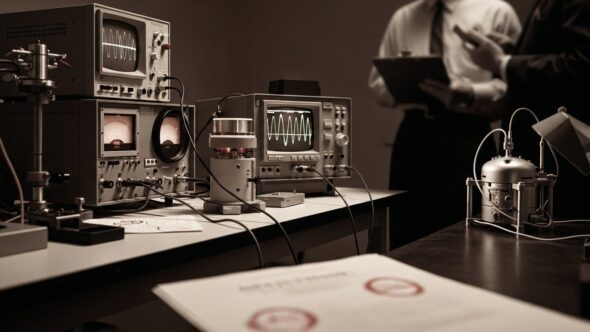
Real events - like the launch of a nuclear reactor into space in 1965 - will be treated as raw mythic material, then open into a world you can step inside.
More updates coming along these lines as Needle on the Rim circulates, and the broader layers of What Remains take shape.
Meanwhile: The Investigation Continues... 
— Jason Rosette Phnom Penh, April 2026
(a condensed version of this article appears on Linkedin)
Q&A: Jason Rosette on the Cold War Black Box, Future Noir, and What Remains
Q: You've been known for years as 'the BookWars guy'. Street level, New York, independent. Now you're talking about nuclear physicists and Cold War secrets. What happened?
A: I found out I'd missed a major part of my own picture. My father died when I was eight. We all thought he was just a physicist who grew crystals. That's literally what we believed. It wasn't until 2024, while I was researching a fictional character for a script, that I started pulling a thread that completely unraveled everything I thought I knew about where I came from.
Q: What did you actually find?
A: My father, King H. Rosette, held a Q-level security clearance. That's the nuclear world's equivalent of Top Secret. He was working at Atomics International's De Soto facility in California on classified Cold War projects, including the SNAP-8 and SNAP-10A portable reactor programs. The SNAP-10A was launched into space in 1965. My family had absolutely no idea. He couldn't tell us. He was under a lifetime gag order.
Q: How did you piece it together?
A: From a dark room in Indochina, late at night. I started with the one workplace I remembered: Harshaw Chemical Co. It popped up on the Department of Labor EHSS database, cited for toxic and radiogenic exposure of its workers. That stopped me cold. Then I contacted Case Western, where he got his PhD. Their archivist sent me a snippet from an alumni yearbook listing him at a company I'd never heard of: Atomics International. Then I found a 1963 Atomics International phone directory recovered from a California toxic cleanup case file. Using AI to map his extension number, I placed him at the center of four major radioactive hazards on the facility floor. Not on the periphery. Inside them.
Q: What were those hazards?
A: The L-77 nuclear training reactor, a helium mass spectrometer for fuel-cladding leaks, a gamma radiation station, and the SNAP space-reactor workshop. He worked among all four of them for years.
Q: And this contributed to his death?
A: That's what we're in the process of formally establishing. He died at 43 from occupational radiogenetic illness. The Department of Labor's EEOICPA program exists precisely for cases like his. I've been managing my mother's compensation claim for two years. It's become a second job, conducted entirely online from Indochina. My mother is 85. We are racing the clock. But the government is now on the verge of formally admitting what happened to King H. Rosette in those facilities sixty years ago.
Q: You've talked about the working-class cosplay phenomenon in Hollywood. What do you mean by that?
A: There's a curious pattern where directors and producers from privileged backgrounds work hard to signal working-class authenticity. The struggling artist myth. The welder at night. The hardscrabble Harvard graduate. Potatoes and ketchup in Hollywood. Stealing a movie camera to make a first film. It's a street credibility performance, polished for press. Meanwhile genuine working-class filmmakers get categorized, ceilinged, and treated as novelty acts by the very people performing their struggle.
Q: And your situation was the reverse?
A: Exactly. I was the working-class filmmaker people assumed they understood completely. What nobody knew, including me, was that I was carrying an elite scientific pedigree behind a wall of government secrecy and a corporation's pension denial. When my father died, Harshaw Chemical denied my mother his vested pension because he passed just before ERISA, the federal law meant to protect widows and orphans. Overnight she was left raising three kids alone in a small Ohio town with no degree and no safety net. The hustle was real. The circumstance that created it was not what any of us thought. You can't fake the frequency of someone who actually lived the grind while unknowingly carrying the legacy of an elite physicist.
Q: So what comes next?
A: Two things running in parallel. The first is Needle on the Rim, a cinematic jazz vocal record already out, built from the same atmospheric weight as this story. The second is What Remains, a Future Noir cinematic universe in development. It moves from the Nazi Blitz of 1941 through the Merseybeat moment, through a Beach Boys-informed Southern California of the 60s, decade by decade, until we reach the present: a long-lost elite tech wizard's son in Indochina using AI and fifty-year-old archives to resurrect a silenced history. Operatic rock, fiction film, interactive storytelling. Real events, like the launch of a nuclear reactor into space in 1965, treated as raw mythic material.
Q: One last question. What do you want people to take away from this?
A: That the labels people assign you are often missing critical information. I was measured and categorized for decades by people who assumed they understood my origins, my place, my pedigree and my rank. None of them knew. Neither did I.
The investigation into my father's life changed all of that.
And it isn't finished yet...
